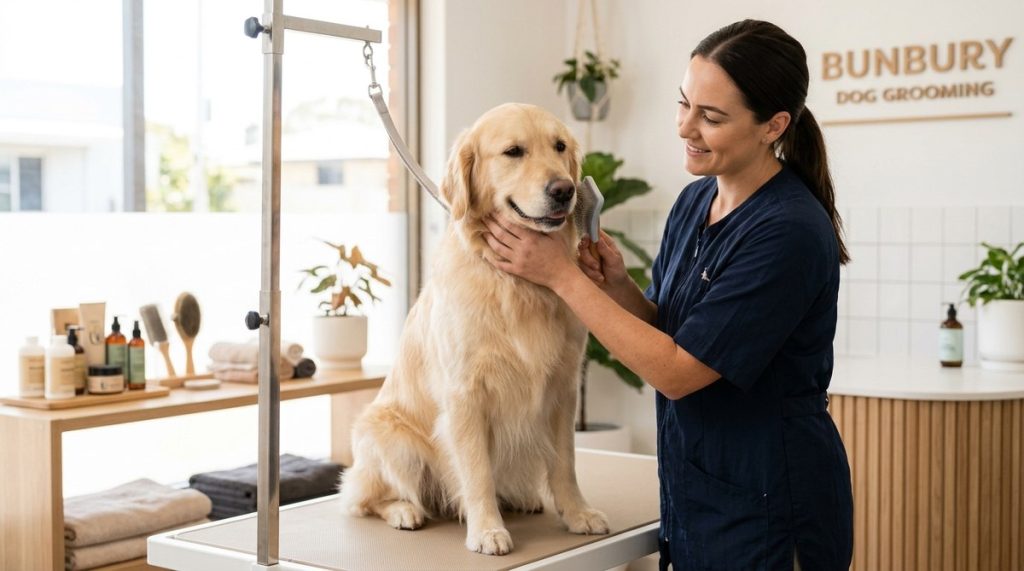
Grooming day does not have to be a tug of war with your best friend. For many dogs, the sights, sounds, and sensations of brushing, nail trimming, and baths can spark fear or frustration. The good news is that with a calm plan, positive experiences, and a little patience, you can dramatically reduce grooming stress and help your dog enjoy better health and happiness. At Bunbury Dog Grooming, we believe every dog deserves grooming that respects their comfort and safety. This guide brings you practical, expert backed steps you can start using today to make grooming a stress free routine.
Understanding grooming stress in dogs
Grooming stress happens when a dog feels unsafe or uncomfortable during grooming tasks. It can stem from past bad experiences, fear of restraint, loud salon noises, unfamiliar tools, or pain from a medical condition. Even dogs who love their daily walks can react negatively when their fur is being brushed or nails are touched.
Common triggers include:
– Being restrained in a grooming table or crate
– Unfamiliar sounds like clippers or dryers
– Sensations on sensitive areas such as paws, ears, and face
– A previous painful grooming experience
– Pain from medical issues such as dental disease, skin problems, or arthritis
Recognizing these triggers early helps you tailor a plan that minimizes stress and builds positive associations.
What to do first
- Observe your dog’s reactions during short handling sessions at home.
- Keep sessions brief and end on a positive note.
- Schedule routine care before stress levels spike, such as after a big walk or play session.
Signs your dog feels stressed during grooming
Grooming stress can show in many ways. Look for these signals and adjust your approach if you notice them.
- Body language that reads as tense
- Pacing or restlessness
- Licking lips or yawning when not tired
- Trembling or whining
- Cowering or trying to escape the grooming area
- Tail tucked low, ears back, or dilated pupils
- Excessive panting or drooling without heat
- Inability to settle even after short breaks
If you notice multiple signs, it is a clear signal to pause, reassess, and employ gentler techniques or seek professional help.
Preparing your dog for grooming
A well prepared dog is far less stressed than one surprised in the grooming room. Preparation builds predictability and confidence.
At home desensitization steps
- Start with small, positive exposures to grooming tools. Let your dog sniff brushes, combs, and clippers without using them.
- Pair each exposure with high value rewards. Treats or a favorite toy after calm handling reinforces good behavior.
- Practice gentle handling in your daily routine. Gently touch paws, ears, and tail for a few seconds at a time and reward calm behavior.
- Introduce touch on the body in a non grooming context. For example, pet your dog and then reward, gradually increasing the duration.
- Create a brief grooming routine at home. Even 5 minutes of brushing or nail care a few times a week helps your dog become familiar with the process.
Creating a positive grooming environment
- Choose a quiet, comfortable room with good lighting.
- Use a non slip mat to keep your dog steady and reduce fear of slipping.
- Play soft, calming music to reduce noise anxiety.
- Maintain a warm but not hot room temperature; dogs dislike cold or drafty spaces.
- Have high value treats ready and a favorite toy nearby for breaks.
Building a routine that your dog can expect
- Pick a consistent time of day for grooming tasks.
- Keep sessions short and focused on one or two tasks at a time.
- End every session with a fun activity and a special treat to reinforce positive feelings.
Grooming at home: tools, setup, and techniques
Home grooming should feel safe, simple, and rewarding for your dog. The right tools and a gentle approach reduce stress and build trust.
Bathing and brushing without drama
- Use lukewarm water and a dog friendly shampoo to avoid skin irritation.
- Wet your dog gradually, starting from the neck and moving toward the back.
- Use a slow, even brushing rhythm. If your dog resists, stop and reward before resuming.
- Break longer baths into short segments with breaks for play or cuddles.
- Reward repeatedly for staying calm, with praise and treats.
Nail trimming and ear cleaning safely
- Trim nails in small increments to avoid sudden contact and panic.
- If your dog has a quick that is visible through the nail, trim just a tiny amount and stop.
- For ear cleaning, dampen a cotton ball with a canine ear cleaner and wipe the outer ear only. Never insert objects into the ear canal.
- Pair nail and ear care with treats so the pair feels like a positive experience rather than a stress trigger.
Brushing and coat care
- Decide on a brushing frequency that suits your dog’s coat type.
- Use low pressure and long, smooth strokes rather than short, abrupt pulls.
- Tangle prone areas may require detangling spray to ease brushing. Use gentle patience to work through mats.
When to work with a professional groomer
If your dog shows extreme anxiety or fear that does not improve with at home techniques, a professional groomer can help plan a low stress approach. Look for groomers who emphasize gentle handling, desensitization routines, and a calm environment.
Choosing a groomer who prioritizes comfort
- Ask about their handling methods and how they reduce stress for anxious dogs.
- Request a tour of the grooming area to assess noise, smells, and workflow.
- Inquire about break policies and if they accommodate extra time for anxious dogs.
- Ensure they use positive reinforcement and avoid punishment based methods.
What to tell your groomer
- Your dog’s triggers and what has previously stressed them.
- Any medical conditions or pain issues that the groomer should know about.
- The level of day to day handling your dog is comfortable with.
- Your preferred grooming routine and comfort thresholds for clipping and trimming.
Stress reducing products and aids
A careful combination of tools and aids can make a big difference in your dog’s comfort during grooming.
Calming aids and pheromones
- Adaptil dog pheromone products can help create a sense of calm during grooming sessions.
- Zylkene is a natural supplement often used to support calm behavior in dogs before stressful events. Always check with your vet before starting any supplement.
- CBD products are used by some owners for anxiety reduction; consult with a veterinarian to determine safety and dosage for your dog.
Comfort items and scents
- A familiar blanket or piece of clothing with your scent can comfort your dog in the grooming space.
- Use a favorite toy as a reward during easy tasks and breaks to reinforce positive associations.
- A soft, low friction grooming mat can help your dog feel more secure during brushing and bathing.
Practical grooming aids
- Slow, steady drying with a low heat setting helps prevent fear of the dryer.
- Non slip mats and harness restraints designed for comfort can reduce the fear of restraint during grooming.
- Gentle grooming gloves can allow you to simulate a groomer’s touch at home with a familiar feel for your dog.
Breed specific considerations
Different breeds bring unique grooming challenges and stress factors. Tailoring your approach helps reduce anxiety.
Small breeds
- They may feel vulnerable and overwhelmed by large equipment. Keep sessions short and move at a pace that respects their sensitivity.
- Use calm, close contact and consider a smaller, lighter brush designed for tiny animals.
Large breeds
- Their grooming sessions can be lengthy. Break tasks into multiple shorter sessions and ensure frequent breaks.
- Use a sturdy, non slip surface and maintain steady communication to keep them calm.
Sensitive breeds
- Breeds with sensitive skin or ears may require hypoallergenic products. Always test products on a small skin patch first.
- Gentle handling and slower transitions to nail trimming or ear cleaning reduce stress.
Scheduling and consistency
Consistency is a major factor in reducing grooming stress. The more predictable your dog finds grooming days, the less fear and anxiety there will be.
Routine and predictability
- Maintain a predictable routine for both at home and with your groomer.
- If you must cancel or reschedule, give a heads up and keep the new schedule consistent.
- Use a small pre grooming ritual, such as 10 minutes of quiet petting or a short walk to expend energy before grooming.
The 4 week grooming plan
- Week 1: Short session focusing on pleasant handling and brushing. Reward generously.
- Week 2: Introduce the bath or nail trim in a controlled manner, with breaks for play.
- Week 3: Increase exposure to grooming sounds like clippers at a very low volume, with frequent rewards.
- Week 4: Build to a more complete grooming session if your dog is comfortable, or continue with incremental advancement as tolerated.
Health and safety considerations
Grooming should protect your dog’s health while avoiding unnecessary pain or fear.
Medically safe sedation and alternatives
- Sedation is sometimes used for severely anxious dogs, but it requires veterinary supervision.
- Non pharmacological options often work well, including desensitization, counter conditioning, and controlled exposure.
- Always consult with your veterinarian before any sedation and discuss alternative approaches if your dog has a medical condition.
Important signs to stop grooming
- Sudden vomiting, collapse, or fainting
- Severe panting, inability to settle, or signs of pain that appear new or worsening
- Prolonged drooling or coughing during a session
- Red flags such as eye irritation or nosebleeds after a session
If any of these signs appear, discontinue grooming immediately and seek veterinary care.
The Bunbury Dog Grooming approach
We believe grooming should be a partnership between you, your dog, and the groomer. Our philosophy centers on comfort, trust, and science backed techniques.
- We emphasize positive reinforcement and treats to create a rewarding experience.
- We tailor grooming plans to your dog’s temperament and medical needs.
- We educate owners with breed specific guidance for stress free grooming routines at home.
- We encourage gradual desensitization to grooming tools and sounds.
- We maintain a calm, low stress environment and communicate openly with owners about progress.
At home tips from our pros
- Start with short daily handling sessions that involve brushing and gentle touch.
- Build a mini grooming station at home with a comfortable, familiar space.
- Keep your equipment organized and within easy reach to reduce setup time.
- Use a stepwise approach for nail trims and ear care, always ending with a reward.
- Maintain a calm voice and slow movements to reassure your dog during every step.
Real world case studies and examples
- Case study one: A terrier mix who feared baths. We started with dry brushing, then introduced a warm rinse on a small area using a cup, gradually extending the time while rewarding. After four weeks, baths became a positive, calm experience.
- Case study two: A senior hound with arthritis. We shortened sessions, avoided bending the hind legs, used warm towels and short, frequent touchups. The dog remained happier and more comfortable during grooming.
Quick reference checklist for reducing grooming stress
- Start with a 5 minute handling session daily
- Use a calm, quiet grooming space
- Introduce one new tool at a time
- Use high value treats and gentle praise
- Schedule shorter sessions, gradually expanding as tolerated
- Check with your vet if pain or medical issues complicate grooming
- Consider professional help if stress remains high
FAQs
- Can grooming cause lasting trauma? With proper handling and gradual desensitization, most dogs adjust well. Seek help if fear persists or worsens.
- How often should I groom a stressed dog? Short, frequent sessions are usually better than long, infrequent ones.
- Are calming aids safe for dogs? Many are safe when used as directed. Always consult your veterinarian before starting new products.
If you are unsure how to begin, or if your dog has complex fears around grooming, Bunbury Dog Grooming can provide guidance tailored to your dog. Our goal is to help you approach grooming in a way that reduces stress while keeping your dog healthy, comfortable, and happy.
By following these steps and staying consistent, you can transform grooming from a feared task into a peaceful, even enjoyable, routine for your dog. The journey may take time, but the payoff is a better life for your pet and a stronger bond between you. If you want more breed specific tips or a customized home grooming plan, explore our dog grooming tips category at Bunbury Dog Grooming and reach out to our team for personalized support.